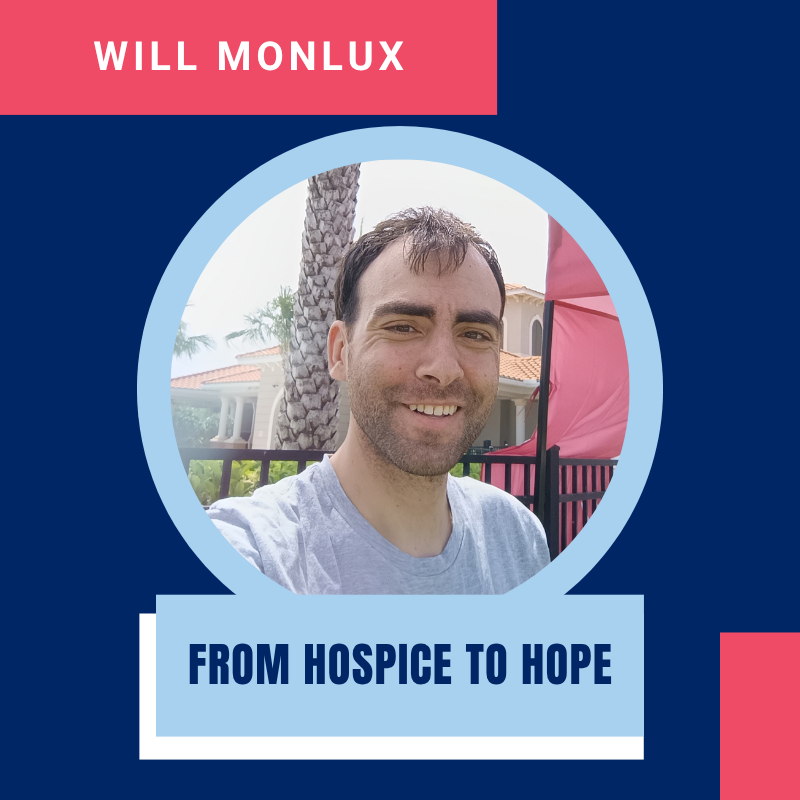
From Hospice to Hope: One Patient's Journey Through Compassionate Use
At 29, Will Monlux was preparing to apply to medical school when he learned he had stage IV liver cancer. After several treatments and a clinical trial failed to control his disease, his medical team recommended hospice care. Yet Will and his family continued exploring possible treatments.
Their search led to compassionate use, also called expanded access—a pathway that may allow patients with serious illnesses to receive investigational drugs outside clinical trials. Within six weeks of starting an investigational therapy, Will reported a dramatic reduction in his tumor burden. About a year later, he completed a triathlon.
During Blue Faery's The Truth About Liver Cancer: Compassionate Use in Liver Cancer Care workshop, Will described the obstacles he faced and why having a voice in treatment decisions mattered as much as finding another option.
An Unexpected Diagnosis at 29
Will's symptoms initially seemed unrelated to cancer: diarrhea, vomiting, and fatigue. He had seen his primary care physician, but the cancer was not detected. Eventually, he went to the emergency room, where tests revealed a large liver tumor.
He was alone when he received the diagnosis in the early morning hours. Over the following days, he struggled to sleep and began reconsidering his future. Instead of assuming he had decades ahead, he asked what would matter if he had only a few years. His answer was to make a positive impact in his community.
That sense of purpose helped him navigate the uncertainty ahead.
When Treatment Options Narrowed
Will's doctors initially considered transplantation and surgery. They ultimately pursued systemic immunotherapy to try to shrink the cancer enough for an operation, but his disease progressed through multiple treatments.
A clinical trial offered another possibility, though enrolling was challenging. Will described an unsettling washout period when he had to stop prior medication before trial treatment. Eligibility requirements added uncertainty. Once enrolled, he experienced rashes and other side effects that prompted a dose reduction.
Although early assessments suggested a response, later measurements raised doubts about whether the treatment was working. As his condition deteriorated, he found it harder to speak up about changing course. He was eventually referred to hospice.
Finding Compassionate Use?
Will's father, a physician, helped him review medical research and contact specialists. They connected with Dr. Ildiko Csiki, whose work included helping patients explore compassionate use.
An investigational therapy they first considered was not appropriate for Will. But information from molecular testing of his cancer helped the team identify another potential option.
Compassionate use does not mean any experimental drug is available on request. A physician must consider whether a treatment is medically appropriate, and access depends on the manufacturer and applicable regulatory requirements. Investigational therapies also carry uncertainty about benefits and risks.
Will described barriers at every stage: finding trustworthy information, locating a physician familiar with the process, identifying a potential drug, and arranging access. Even his primary oncologist had limited familiarity with compassionate use.
His experience illustrates why patients may need substantial assistance to explore this pathway—especially when they are already seriously ill.
Why Earlier Conversations Matter
One of Will's clearest lessons was the importance of exploring possibilities before a crisis. Research, molecular testing, specialist consultations, and expanded access arrangements can take time. When a patient is already very ill, that time may be difficult to find.
Will was fortunate to have a father who could help interpret medical literature and make connections. He recognized that many patients do not have that support.
Patients and caregivers can begin by asking their oncology team what clinical trials might be relevant, whether molecular testing could inform treatment decisions, and when a second opinion from a liver cancer specialist may be useful. These conversations do not require abandoning current treatment; they can help families understand what might be available later.
Hope Meant Having a Voice
For Will, the turning point was not only the response to treatment. After the hospice recommendation, having people continue to advocate for him restored a sense of agency.
He was not expecting to run a triathlon. What mattered at first was believing that the next day could still be valuable and knowing there were people willing to help him explore his choices.
After receiving an investigational therapy through compassionate use, Will reported that his tumor volume fell substantially within about six weeks. Roughly a year later, he finished a triathlon—an extraordinary outcome after being told hospice was the next step.
His experience is personal, not a prediction of what others will experience. Compassionate use does not guarantee that a drug will be available, safe, or effective. But his story demonstrates why patients deserve clear information and a meaningful role in decisions about their care.
Helping Others Find Support
Will now advocates for people navigating serious illnesses through his involvement with the Wondrlink Foundation and WondrVoices. He wants patients to feel less alone and better informed about investigational treatment pathways.
His experience offers a few practical reminders:
Ask early. Discuss clinical trials and possible future treatment options before standard therapies are exhausted.
Seek expertise. A second opinion or a specialist familiar with liver cancer research may help clarify the options.
Share the workload. Invite trusted family members, caregivers, or patient advocates to help gather questions and information.
Protect patient choice. Weigh possible treatments against personal goals, quality of life, and uncertainty.
Will's story is not only about going from a hospice referral to a triathlon. It is about the importance of information, support, and the opportunity to participate in decisions when the future feels uncertain.
Learn More About Compassionate Use
Hear Will's story and other perspectives in Blue Faery's The Truth About Liver Cancer: Compassionate Use in Liver Cancer Care.
Watch the full workshop to learn more about expanded access and the challenges patients may encounter when seeking investigational treatments.