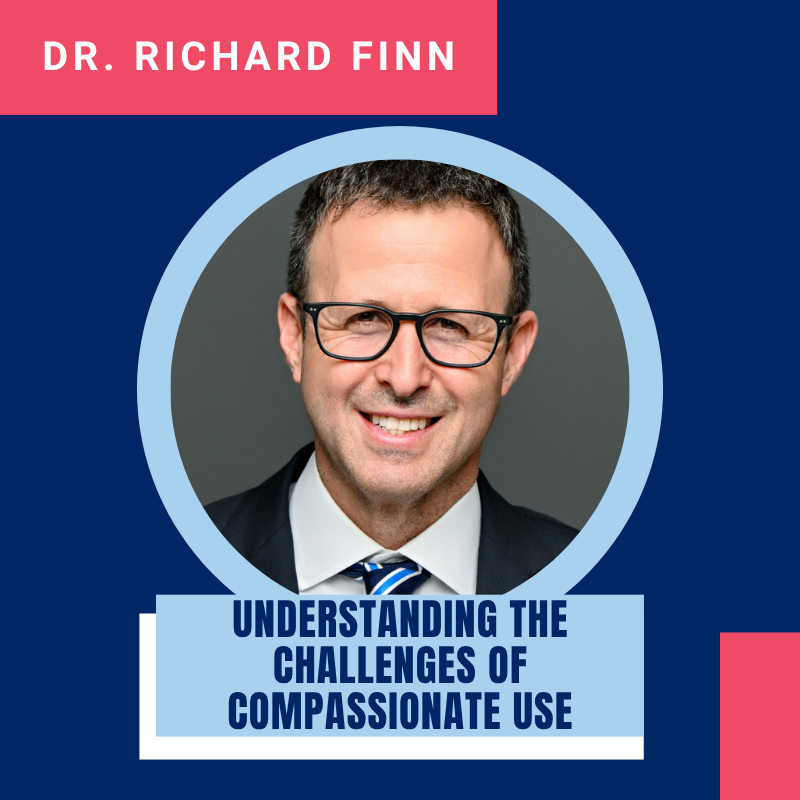
Beyond Clinical Trials: Understanding the Challenges of Compassionate Use
When standard liver cancer treatments are no longer effective, patients and caregivers may begin searching for other options. Clinical trials can provide access to investigational therapies, but not everyone qualifies. For some patients, compassionate use may offer another pathway.
Also known as expanded access, compassionate use allows certain patients with serious or life-threatening conditions to receive investigational treatments outside clinical trials. However, accessing these treatments can involve significant medical, regulatory, and logistical challenges.
During Blue Faery's The Truth About Liver Cancer: Compassionate Use in Liver Cancer Care workshop, Dr. Richard Finn, a professor of medicine and liver cancer specialist at UCLA, explained how expanded access works, why it can be difficult to obtain, and what patients should know before pursuing this option.
What Is Compassionate Use?
Compassionate use is a regulated pathway that may allow patients to access investigational drugs or medical devices when satisfactory treatment alternatives are unavailable.
Dr. Finn explained that clinical trials are designed to answer specific research questions. To ensure reliable results and protect participants, researchers establish eligibility requirements, known as inclusion and exclusion criteria.
These requirements may consider a patient's overall health, laboratory results, previous treatments, and other medications.
Consequently, some patients who might be interested in an investigational therapy cannot participate in the clinical trial studying it.
Expanded access can provide an alternative for certain patients who cannot enroll in clinical trials. However, it is not simply another medication that a physician can prescribe. Access requires additional approvals, coordination, and medical oversight.
When Might Expanded Access Be Considered?
Treatment options for hepatocellular carcinoma (HCC), the most common type of primary liver cancer, have advanced considerably over the past two decades.
Targeted therapies and immunotherapies have expanded treatment options for patients with advanced disease. Nevertheless, some patients eventually reach a point where established therapies are no longer working.
Dr. Finn explained that expanded access may be considered when a patient has limited remaining treatment options but is still medically well enough to pursue additional treatment.
Whether compassionate use is appropriate depends on the patient's condition, the investigational medication, and the availability of other treatments.
Importantly, expanded access does not guarantee that a drug will be available or effective. These therapies remain investigational, meaning their full benefits and risks have not been established..
Why Is Compassionate Use So Difficult to Access?
One of Dr. Finn's central messages was that obtaining an investigational drug involves considerably more than identifying a promising treatment.
Unlike approved medications, investigational therapies are not generally available through a pharmacy. Physicians must navigate a regulated process involving several parties.
Creating a Treatment Protocol
When an investigational medication is not available through an established expanded access program, a physician may need to prepare an individualized treatment request.
This typically includes a protocol outlining the patient's diagnosis, the proposed treatment, and how the medical team will monitor safety and response.
The protocol may specify medication dosage, treatment frequency, laboratory testing, imaging, and circumstances that would require treatment to stop.
These details help establish a plan for administering the investigational therapy under medical supervision.
Obtaining Manufacturer Cooperation
Even when a physician believes an investigational treatment may be appropriate, the pharmaceutical manufacturer must agree to provide it.
Some companies establish expanded access programs for promising drugs undergoing clinical development. When these programs exist, accessing treatment may be easier.
Otherwise, a physician may need to work directly with the manufacturer to request medication for an individual patient.
Manufacturers are not required to provide investigational products, so their participation can be a major factor in whether treatment can proceed.
Navigating Regulatory Requirements
Dr. Finn also described the role of the Food and Drug Administration (FDA) and institutional review boards (IRBs) in expanded access.
For individual patients, physicians may pursue a single-patient Investigational New Drug (IND) application to request authorization to administer an investigational medication outside a clinical trial.
Appropriate IRB oversight is also part of the process.
Together, these steps establish medical and ethical safeguards, but they require time and administrative resources.
Making Compassionate Use More Accessible
Looking ahead, Dr. Finn hopes expanded access can become less administratively burdensome.
He identified paperwork, limited institutional resources, and liability concerns as significant barriers.
Manufacturers may worry about unexpected adverse events involving investigational medications, while physicians and institutions must consider their responsibilities when administering treatments that have not received full regulatory approval.
Dr. Finn believes reducing unnecessary administrative requirements and addressing liability concerns could make participation more practical for healthcare professionals and manufacturers.
However, simplifying the process must be balanced with appropriate safeguards for patients receiving investigational therapies.
What Patients and Caregivers Should Know
Dr. Finn's discussion offers several practical considerations for patients exploring treatment options beyond standard care:
Ask about clinical trial eligibility. Understanding why a trial may or may not be appropriate can help identify other possibilities.
Consider a second opinion. A liver cancer specialist at an academic medical center may be familiar with emerging treatments and expanded access opportunities.
Discuss investigational therapies early. Identifying appropriate options and navigating access requirements can take time.
Understand the limitations. Compassionate use depends on medical eligibility, manufacturer cooperation, and applicable oversight requirements.
Keep expectations realistic. Investigational treatments may offer possibilities, but their effectiveness is uncertain, and they may carry significant risks.
For patients and caregivers, understanding these considerations can help make conversations with medical professionals more productive.
Although compassionate use is not available or appropriate for every patient, greater awareness of the pathway can help people ask informed questions when established treatments are no longer sufficient.
Learn More About Compassionate Use
Dr. Finn's discussion was part of Blue Faery's The Truth About Liver Cancer: Compassionate Use in Liver Cancer Care workshop, featuring perspectives from medical experts, patients, and advocates.
Watch the full workshop to learn more about expanded access and the challenges patients may encounter when seeking investigational treatments.