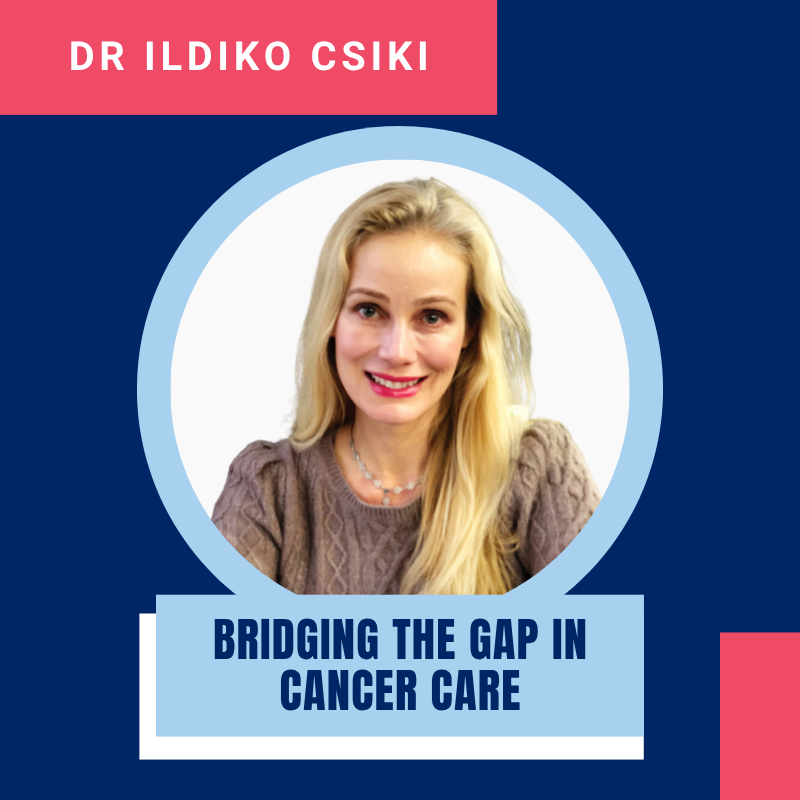
When Promising Treatments Are Out of Reach: Bridging the Gap in Cancer Care
For patients with advanced liver cancer, learning that a promising new treatment exists can bring hope. But what happens when that treatment is being studied in a clinical trial that they cannot join?
Investigational cancer therapies may show encouraging results in research, yet patients who could potentially benefit from them may have no straightforward way to obtain them. Clinical trial eligibility requirements, geographic limitations, and the complexities of drug development can all create barriers.
Dr. Ildiko Csiki, an oncologist and cancer researcher with more than 20 years of experience, has spent much of her career confronting this challenge.
During Blue Faery's The Truth About Liver Cancer: Compassionate Use in Liver Cancer Care workshop, she explained why promising treatments do not always reach patients who need them, how compassionate use may help bridge that gap, and why exploring options early is so important.
When Cancer Research Becomes Personal
Dr. Csiki's commitment to oncology began with her own family's experience.
Growing up in Hungary, she was especially close to her grandfather, a World War II veteran who had survived imprisonment in Siberia and rebuilt his life after extraordinary hardships.
While Dr. Csiki was beginning her medical training in the United States, her grandfather was diagnosed with advanced colorectal cancer.
She returned to Hungary to explore treatment options but learned that his cancer had already spread. With no effective treatment available to him, she brought him to the United States, where she arranged hospice care and support for his symptoms.
He died approximately a month later.
The experience strengthened her determination to help patients who had exhausted available treatments.
Dr. Csiki pursued a career combining patient care and laboratory research, hoping to turn scientific discoveries into more effective cancer therapies.
However, she soon encountered a troubling disconnect between what researchers were discovering and what physicians could offer their patients.
The Gap Between Research and Available Treatments
Early in her career, Dr. Csiki treated patients with thoracic cancers, including lung cancer, while conducting laboratory research.
She regularly encountered patients who had exhausted available treatments or did not qualify for clinical trials.
Meanwhile, researchers were developing promising therapies that were not yet accessible through routine medical care.
For Dr. Csiki, telling patients there were no remaining treatment options while knowing that potentially useful medications were being investigated was one of the most difficult aspects of oncology.
She wanted to understand how to move discoveries from laboratories into patient care more efficiently.
That goal led her from academic medicine into pharmaceutical drug development, including work during the early development of pembrolizumab, an immunotherapy that later became an important treatment for several cancers.
Her experience across research, clinical medicine, and biotechnology reinforced a central concern: developing new cancer medications is essential, but so is improving patients' ability to access appropriate investigational treatments.
Why Clinical Trials Are Not Accessible to Everyone
Clinical trials play an essential role in determining whether new treatments are safe and effective.
However, Dr. Csiki explained that many patients encounter significant obstacles to participation.
Geographic access is one major challenge.
Many people receive cancer care through community healthcare providers, while clinical trials involving newer treatments may be concentrated at major academic medical centers.
Traveling long distances or relocating temporarily can be financially, physically, and emotionally difficult, particularly for patients managing advanced disease.
Eligibility requirements present another barrier.
Clinical trials use carefully defined criteria to select participants and evaluate treatments consistently. A patient's overall health, laboratory results, previous therapies, or other medical conditions may prevent enrollment.
The disease being studied can also limit access.
Dr. Csiki described situations in which a drug is being investigated for one cancer type but may have a scientific rationale for treating another.
For example, a medication being studied in lung cancer might have characteristics suggesting potential activity against a particular liver cancer. However, if no trial is available for liver cancer patients, an individual may have no way to participate in that research.
These circumstances are among the reasons expanded access, also known as compassionate use, can be important.
How Compassionate Use May Help Bridge the Gap
Compassionate use provides a pathway for certain patients with serious or life-threatening conditions to seek investigational treatments outside clinical trials.
Dr. Csiki emphasized that this can be particularly relevant when a patient does not qualify for an available study but there is a sound medical and scientific rationale for considering an investigational therapy.
The goal is not simply to try an experimental drug because other options have failed.
Instead, physicians must evaluate whether a treatment is appropriate for the individual patient, considering the available research, the patient's condition, and the characteristics of their cancer.
Advances in precision oncology have made this individualized approach increasingly important.
Precision oncology uses information about a patient's cancer, including molecular and genetic characteristics, to help guide treatment decisions.
Such information may help physicians identify investigational therapies worth exploring, even when those medications are being studied primarily in other cancers.
However, identifying a potentially appropriate drug does not guarantee access. The treating physician, manufacturer, and applicable regulatory processes all play roles in determining whether treatment can proceed.
Why Dr. Csiki Helped Establish Wondrlink
After years of working in oncology and drug development, Dr. Csiki became increasingly concerned about the difficulty patients and physicians face when navigating investigational treatments.
That concern helped inspire the creation of the Wondrlink Foundation.
Wondrlink aims to connect patients, physicians, and pharmaceutical companies while providing information and resources about potential treatment options through compassionate use.
Dr. Csiki emphasized that the organization's purpose is not to promise patients access to a particular medication.
Instead, it seeks to help people understand what may be possible, identify questions to discuss with their physicians, and connect healthcare professionals with resources for navigating expanded access.
This support can be especially valuable for community oncologists who may not routinely prepare individualized investigational treatment requests.
By improving awareness and coordination, organizations such as Wondrlink hope to make a complicated process easier to understand and navigate.
Why Timing Matters When Exploring Treatment Options
Perhaps Dr. Csiki's most important message was that patients should not wait until they have exhausted every treatment before learning about investigational options.
Obtaining compassionate use treatment can require extensive research, medical evaluation, coordination, and time.
For someone whose cancer is progressing rapidly, delays may be particularly consequential.
Dr. Csiki discussed how advanced disease can also affect organ function and overall health, potentially making additional treatment more difficult even when an investigational medication becomes available.
She encouraged patients and healthcare teams to think ahead.
While receiving standard treatment or exploring clinical trials, patients can also ask whether molecular testing, investigational therapies, or expanded access might become relevant later.
Beginning those conversations earlier does not mean abandoning established treatments. It means gathering information that could support future decisions.
What Patients and Caregivers Can Do
Dr. Csiki's experience offers several practical considerations for people exploring additional cancer treatment options:
Ask about clinical trials early. Learn what studies may be available and whether eligibility requirements could affect participation.
Discuss molecular testing. Ask whether testing the cancer's genetic or molecular characteristics could help identify potential treatment options.
Explore possibilities beyond local care. A specialist at an academic cancer center may know about emerging therapies or investigational treatment programs.
Ask about expanded access. If standard treatments become insufficient, discuss whether an appropriate investigational therapy could be considered.
Seek reliable support. Patient advocacy organizations and resources such as Wondrlink may help patients and physicians understand the available pathways.
Not every investigational treatment will be suitable or accessible, and promising research does not guarantee a favorable outcome.
However, informed conversations can help patients and their medical teams evaluate possibilities before time becomes an additional barrier.
Bringing Promising Research Closer to Patients
Dr. Csiki's career reflects a commitment to bridging the distance between scientific discovery and patient care.
Her experience as a family caregiver, oncologist, researcher, and drug developer has shown her how difficult it can be when potentially promising therapies remain beyond a patient's reach.
Compassionate use cannot eliminate every barrier, but greater awareness, earlier planning, and stronger collaboration may help more patients understand the options available to them.
For people affected by liver cancer, the message is clear: learning about potential treatment pathways early can make conversations with healthcare professionals more informed and productive.
Learn More About Compassionate Use
Hear Dr. Csiki's full discussion and learn from other patients, advocates, and medical experts in Blue Faery's The Truth About Liver Cancer: Compassionate Use in Liver Cancer Care.
Watch the full workshop to learn more about expanded access and the challenges patients may encounter when seeking investigational treatments.