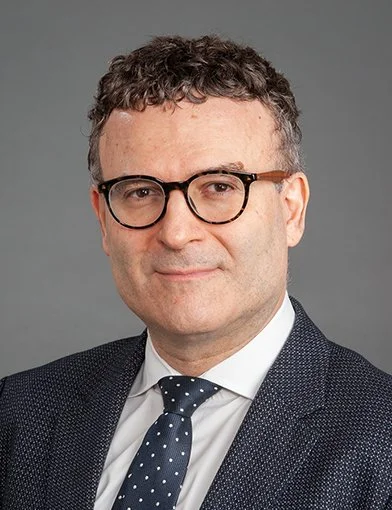
Improving Liver Cancer Care for Life
Choosing Medicine by Process of Elimination
Dr. Boris Pasche has built his career on understanding cancer, finding better treatments, and giving patients more options than ever before. His journey to medicine, however, was not a straight path.
Growing up in Switzerland, Dr. Pasche faced a major decision at the end of high school: pursue engineering, law, or medicine. All three interested him, but after weighing the options, he chose medicine. It was not a childhood dream—it was a thoughtful choice. A few years into medical school, he realized he had made the right decision and committed fully to the field.
A Personal Loss That Shaped His Path
During medical school, tragedy struck. His brother died from acute myeloid leukemia at just 21 years old. Dr. Pasche was 23 at the time. The loss was devastating and initially pushed him away from pursuing cancer care.
That changed when he began his residency in New York. While rotating through Sloan Kettering, he spent time on the leukemia ward and saw many young patients facing the same disease that had taken his brother. Instead of avoiding the pain, he decided to confront it. The experience ignited his passion for oncology.
Discovering a Focus in Gastrointestinal Cancers
At Sloan Kettering, Dr. Pasche developed a strong interest in gastrointestinal cancers—conditions affecting the digestive system, including colon, pancreatic, and liver cancers. Over time, he focused more on liver cancer, also known as hepatocellular carcinoma (HCC).
In the early 2000s, he began working on a new medical technology for cancer treatment. This work led him to create a device specifically designed to treat HCC. In 2018, the device received regulatory approval in Europe.
The Early Patients He Will Never Forget
Dr. Pasche vividly remembers his first HCC patient—a young man from West Africa in his early 20s. The patient's liver function was so poor that treatment options were almost nonexistent. It was the 1990s, a time when most liver cancer diagnoses came too late, leaving little hope for survival. He also recalls another patient from his medical school days in Sweden—a man in his 40s diagnosed with liver cancer at a very advanced stage. For both patients, no treatments were available. These cases left him wondering why liver cancer had so few options compared to other cancers.
Progress Over the Last Decade
Ten years ago, the primary drug available for liver cancer was sorafenib. Today, patients have more choices. Immunotherapy, also known as checkpoint inhibitors, has expanded treatment options.
Earlier detection is also improving, which means more patients are eligible for localized therapies or even liver transplantation—the most effective long-term option when available. While these advances are significant, Dr. Pasche believes there is still a long way to go before liver cancer can be managed as successfully as other cancers.
Improving Screening in the United States
According to Dr. Pasche, better screening starts with identifying high-risk groups. In the U.S., specific populations face higher liver cancer rates, including:
Hispanic Americans in regions like Texas
Asians with chronic hepatitis (usually hepatitis B)
People with obesity and diabetes
Those with chronic alcoholism or other liver diseases
He believes liver cancer screening should follow the model used for breast and colon cancer—identify at-risk individuals and detect the disease as early as possible. Early-stage diagnosis leads to far better outcomes.
Challenges Patients Face After Diagnosis
When patients are diagnosed with liver cancer, the main challenge is access to the full range of treatment options. At an early stage, patients might be eligible for:
Chemoembolization
Radiofrequency ablation
Surgical resection
Liver transplantation
Unfortunately, not all patients live near medical centers offering every option. Dr. Pasche stresses the importance of multidisciplinary care, where specialists can evaluate patients and create a personalized plan.
The Power of a Multidisciplinary Team
At Wake Forest*, multidisciplinary care is the standard. Each patient's case is reviewed by hepatologists, surgeons, radiation oncologists, medical oncologists, and interventional radiologists. Together, they discuss treatment possibilities based on the patient's
Overall health
Activity level (performance status)
Liver function
Personal preferences
Quality-of-life goals
This team approach ensures patients receive the most comprehensive care possible. Clinical trials are also part of the process, giving patients access to cutting-edge treatments before they are widely available.
Evaluating Patient Health Before Treatment
Performance status is a key factor in deciding treatment. Doctors assess a patient's level of activity and independence. Someone who is bedridden or has minimal mobility is less likely to respond well to aggressive therapy. On the other hand, active and mobile patients are more likely to tolerate treatments and achieve positive outcomes.
Balancing Research and Patient Care
Today, Dr. Pasche devotes about 80% of his time to research and 20% to seeing patients. His clinical work happens every Thursday, when he meets with patients to discuss diagnoses, treatment plans, and ongoing care. His research focuses on cancer susceptibility and the development of new therapies, including medical devices that can expand treatment options for liver cancer.
A Career Driven by Purpose
From his early days in Switzerland to his leadership roles in the United States, Dr. Boris Pasche has never stopped pushing for better outcomes in cancer care. The loss of his brother set him on a path to make a difference for patients facing life-threatening illnesses. His work has expanded treatment options, improved access to multidisciplinary care, and advanced research that offers hope for the future. While liver cancer remains challenging, Dr. Pasche's contributions have made progress. His commitment has made all the difference for the patients who now have more options—and more time.
*Dr. Pasche now works at the Karmanos Cancer Institute at Wayne State University.