Liver Cancer Survival and the Life-Saving Power of Self-Advocacy
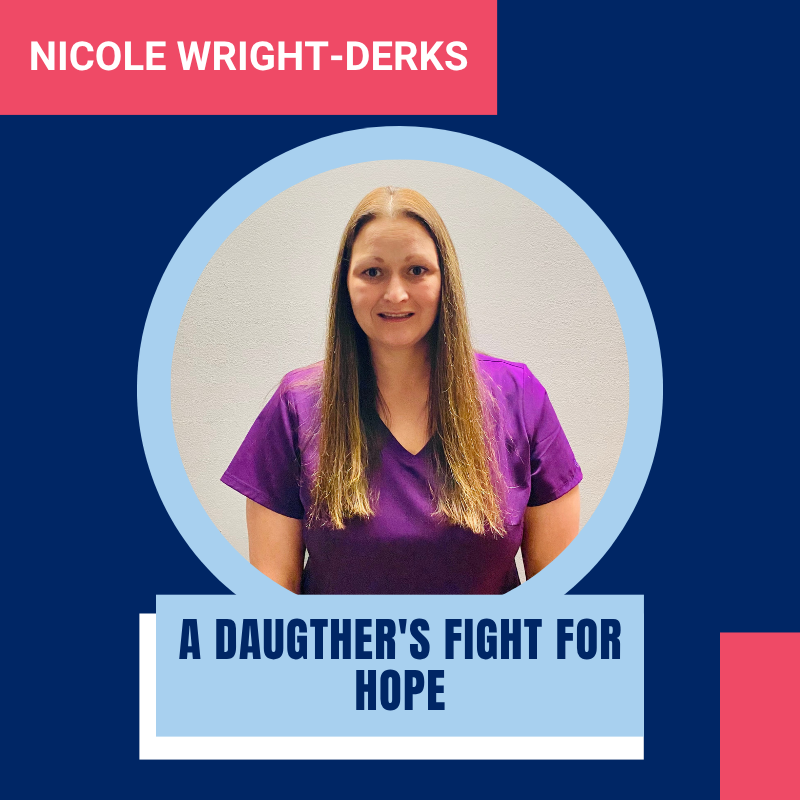
When Blue Faery: The Adrienne Wilson Liver Cancer Association volunteer, Nicole, first heard the words "hepatocellular carcinoma," her world changed forever.
On March 1, 2019, doctors diagnosed her mother with HCC, the most common form of primary liver cancer. The news hit hard. Nicole had already lost her father to liver disease years earlier. Now, her only remaining parent faced a life-threatening diagnosis.
"At the time, we were like, what is that? What is going on? What are we going to do from here?" Nicole recalled.
Nicole's mother had a 7.5-centimeter tumor, roughly the size of a grapefruit. Doctors initially told the family that curative treatment was unlikely. Because of the tumor's size, they believed she would never qualify for a liver transplant from a deceased donor.
For many families, that kind of conversation can feel like the end of hope. Nicole refused to accept that.
Turning Fear Into Advocacy
Nicole works in healthcare and understands how important self-advocacy becomes after a cancer diagnosis. She immediately started researching medical journals, treatment options, and specialists. That search eventually led her to Blue Faery: The Adrienne Wilson Liver Cancer Association, where she now serves as both a volunteer and community ambassador.
Her mother also worked in healthcare, which strengthened their partnership during treatment.
"We became a closer team," Nicole said. "We were fighting for the same reason, to get to the same outcome, which was to become cancer-free ultimately."
Teamwork became essential during treatment.
Understanding Palliative Care
Doctors recommended palliative treatments to shrink the tumor and extend Nicole's mother's life. Nicole explained that many people misunderstand the term "palliative care."
"Palliative care is basically different treatment options that can give you a better quality of life and hopefully a longer lifespan," she said. "It's not a cure."
Over the next several years, Nicole's mother underwent seven different treatments. Each procedure required recovery time, and Nicole stepped fully into the caregiver role.
"Each treatment was a whirlwind," Nicole said. "I definitely stepped into the caregiver role to take care of her and make sure she was okay."
Still, her mother continued to fight.
The Procedure That Changed Everything
After years of treatment, doctors performed Y90 radioembolization, a targeted therapy that delivers radiation directly into liver tumors.
Nicole calls it their "magical procedure."
The treatment stabilized the cancer enough for her mother to finally qualify for a liver transplant finally. In April 2023, after nearly five years of treatment, she received a new liver from a deceased donor.
"It was a miracle," Nicole said.
The transplant recovery went remarkably well. Nicole's mother experienced no major complications and recovered quickly. For nearly a year, every scan showed no evidence of liver cancer.
The family finally believed they had reached the finish line.
When the Cancer Returned
Then came another devastating setback.
In 2024, scans revealed that the cancer had returned in Nicole's mother's lungs.
Doctors had previously told the family that recurrence after transplant was rare. The news forced Nicole back into research mode as she searched for treatment options and clinical trials.
That process uncovered another difficult reality for transplant patients.
Most clinical trials exclude people who have received organ transplants.
The reason is complicated. Transplant recipients must take medications that prevent their bodies from rejecting the donor organ. Some newer cancer treatments, especially immunotherapy, can activate the immune system so strongly that the body attacks the transplanted liver.
Nicole and her mother eventually traveled to Mayo Clinic to explore options. There, they learned that only a small number of liver transplant recipients in the United States have safely received immunotherapy treatments.
"It's very risky," Nicole explained. "You've got a perfectly good liver, but you could walk in and do immunotherapy and have acute rejection."
That uncertainty still weighs heavily on the family today.
The Emotional Reality of Caregiving
Throughout her mother's cancer journey, Nicole remained a steady source of strength. Inside, though, the emotional toll felt overwhelming.
"It's the hardest thing that I've ever had to go through," she said.
Like many caregivers, Nicole learned that she needed her own outlet to survive emotionally. For her, that place became the barn where she spends time with her horses.
"The barn is my serenity and my peace," she said. "You have to find an outlet to be able to be the best you can be for your loved one."
Her advice highlights an important truth many caregivers forget: caring for yourself is not selfish. It is necessary.
Raising Awareness About HCC
Nicole now uses her experience to help other families facing liver cancer. She believes that education and awareness remain among the biggest gaps in HCC care.
Although liver cancer is considered rare in the United States, it is one of the most common cancers worldwide and one of the leading causes of cancer deaths globally.
Because of that, Nicole wants patients and caregivers to have access to better information, stronger support systems, and clearer guidance from the start.
"I think it's really important that we get information out there and help as many people as we can," she said.
A Message for Other Families
Nicole's message to sons and daughters caring for a parent with HCC is simple but powerful: treasure the time you still have together.
"Don't underestimate any days that you have," she said. "If you have an extra five minutes, pick up the phone, call your mom or dad, tell them that you love them."
For families living with liver cancer, time becomes precious in a way few people understand until they experience it themselves.
Nicole's story shows that even during fear, uncertainty, and heartbreak, hope can still survive.