What It's Really Like to Live With Advanced Liver Disease
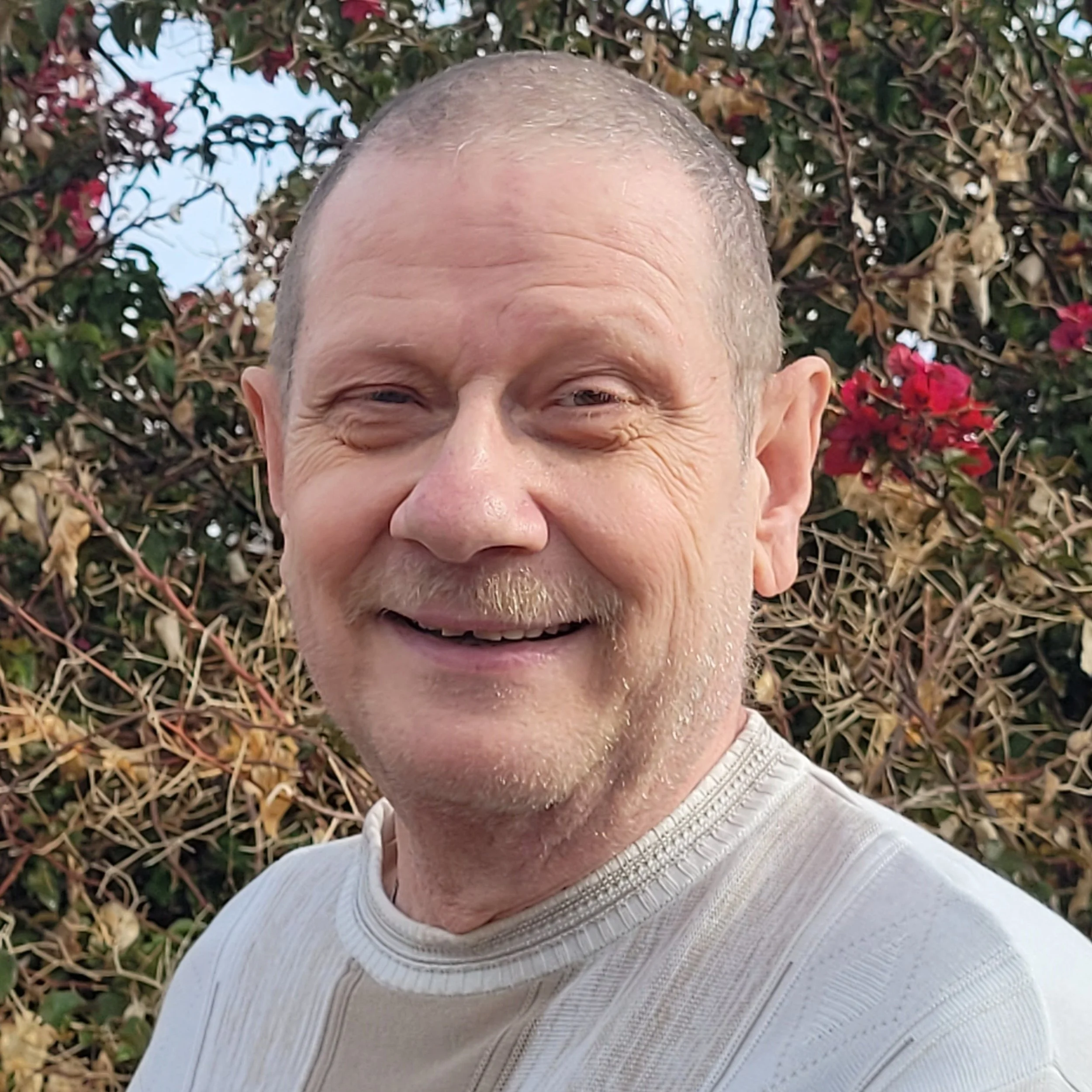
For more than a decade, Bruce Demmig has lived with serious liver disease, navigating ongoing questions and change. Through it all, he speaks up so others do not feel alone.
Bruce's health challenges began in late 2011. At the time, he worked as an architect and often logged 80 to 120 hours each week. Because of this, fatigue felt normal.
But something changed.
While driving to work, Bruce noticed cars appeared much closer than they really were. The shift happened without warning. It was enough to make him stop and ask, "What's going on?"
The First Clues
Bruce went to his doctor and completed a sleep study. He was diagnosed with sleep apnea, which explained some of his fatigue—but not all of it.
Soon after, new symptoms appeared.
He noticed small red dots on his legs and a large bruise on his shin that would not heal. Blood tests revealed low platelets—a condition called thrombocytopenia, which means the blood does not clot as easily as normal.
That result led to more questions.
Doctors discovered his spleen was enlarged, which can be a sign of portal hypertension—high blood pressure in the portal vein that brings blood to the liver. From there, the root issue became clear: liver disease.
A Long and Uncertain Diagnosis
Instead of clear answers, Bruce entered a long period of testing.
In 2012, he underwent frequent blood tests—sometimes every two weeks—along with a bone marrow biopsy and multiple liver biopsies. One biopsy went through the jugular vein. Another was done through the abdomen.
Even with all that testing, doctors could not agree on a diagnosis.
They suggested several possibilities, including cirrhosis, fatty liver disease, and other rare liver conditions. Each test offered partial answers but no clear conclusion.
For years, Bruce lived in that uncertainty.
Learning to Advocate for Himself
Bruce did not accept the unknown without pushing back.
He asked questions and sought a second opinion at another clinic, but answers remained unclear.
That experience shaped how he approaches his care.
Bruce believes strongly in self-advocacy. Patients must speak up, ask questions, and understand what is happening in their bodies.
He shares one simple rule: the only bad question is the one not asked.
The Transplant Question
At one point, Bruce began the process for a liver transplant evaluation.
The liver's ability to regenerate allows for living donor transplants. Bruce completed most of the required testing.
But before the process finished, the transplant team stopped the evaluation.
They believed his condition might not be fully related to liver disease. Because of that, they decided a transplant would not help him.
Bruce was left without a clear next step.
Today, a transplant is still a possibility—but not an easy one. Doctors use a scoring system called MELD (Model for End-Stage Liver Disease) to determine eligibility. Bruce's scores have never been high enough to qualify.
This creates a difficult reality. Patients must be sick enough to need a transplant but healthy enough to survive it.
How Liver Disease Changed Daily Life
Bruce's condition affects nearly every part of his day.
He experiences severe fatigue and hepatic encephalopathy, a condition in which toxins build up in the brain due to poor liver function. This impacts memory and focus. At times, he struggles to concentrate or recall recent events.
In 2013, after experiencing blackout episodes, his doctor told him to stop driving. He has not driven since.
Now, he relies on public transportation for basic tasks like grocery shopping and doctor visits. His independence has changed.
Bruce can only stay active for a few hours each day. Because of this, he had to leave his career and go on disability in 2012.
His personal life has also been affected. Several years ago, his relationship ended, and he now lives alone.
These changes highlight the wide-reaching impact of chronic illness.
A Clearer Diagnosis—But More Questions
After years of uncertainty, Bruce now has a more defined diagnosis.
He has metabolic dysfunction-associated steatohepatitis (MASH)—a liver disease related to metabolic health, where fat builds up and causes inflammation—with stage 3 fibrosis, which is one step before scarring of the liver called cirrhosis.
He also has hereditary hemochromatosis, a condition in which the body absorbs too much iron from food. This excess iron then builds up and can damage organs like the liver.
To manage this, Bruce undergoes regular phlebotomy treatments to remove blood and reduce iron levels.
At the same time, doctors monitor his liver closely through imaging and blood work.
But even now, questions remain.
Some test results improve, while others worsen. Doctors are still working to understand what is driving these changes.
Living With Uncertainty
One of the hardest parts of Bruce's journey is the constant unknown.
Even with treatment and monitoring, there is no clear path forward. Each new test can bring new concerns.
Because of the disease stage, Bruce undergoes cancer screening every six months, as patients with advanced fibrosis face a higher risk.
Living in that space—between stability and progression—is not easy.
What Bruce Wants Others to Know
Bruce uses his experience to help others.
He encourages patients to read their medical reports and understand their results. Knowledge helps patients take control of their care.
He also reminds people that they are not alone.
Liver disease can feel isolating, but shared stories can create connection and support.
A Story of Strength and Persistence
Bruce Demmig's journey is still unfolding.
His journey includes uncertainty, adjustments, and medical challenges. But it also shows resilience.
Through it all, Bruce continues to advocate—for himself and for others.
His story offers something powerful: a reminder that even in the face of the unknown, no one has to walk the path alone.